Website tips
What Happens When Your Business Is Not Online in 2026?
Discover what happens when your business is not online in 2026. Learn how Indian small businesses quietly lose customers searching on Google, miss enquiries, and fall behind competitors.
On this page12 sections
Introduction: The Hidden Cost of Staying Offline
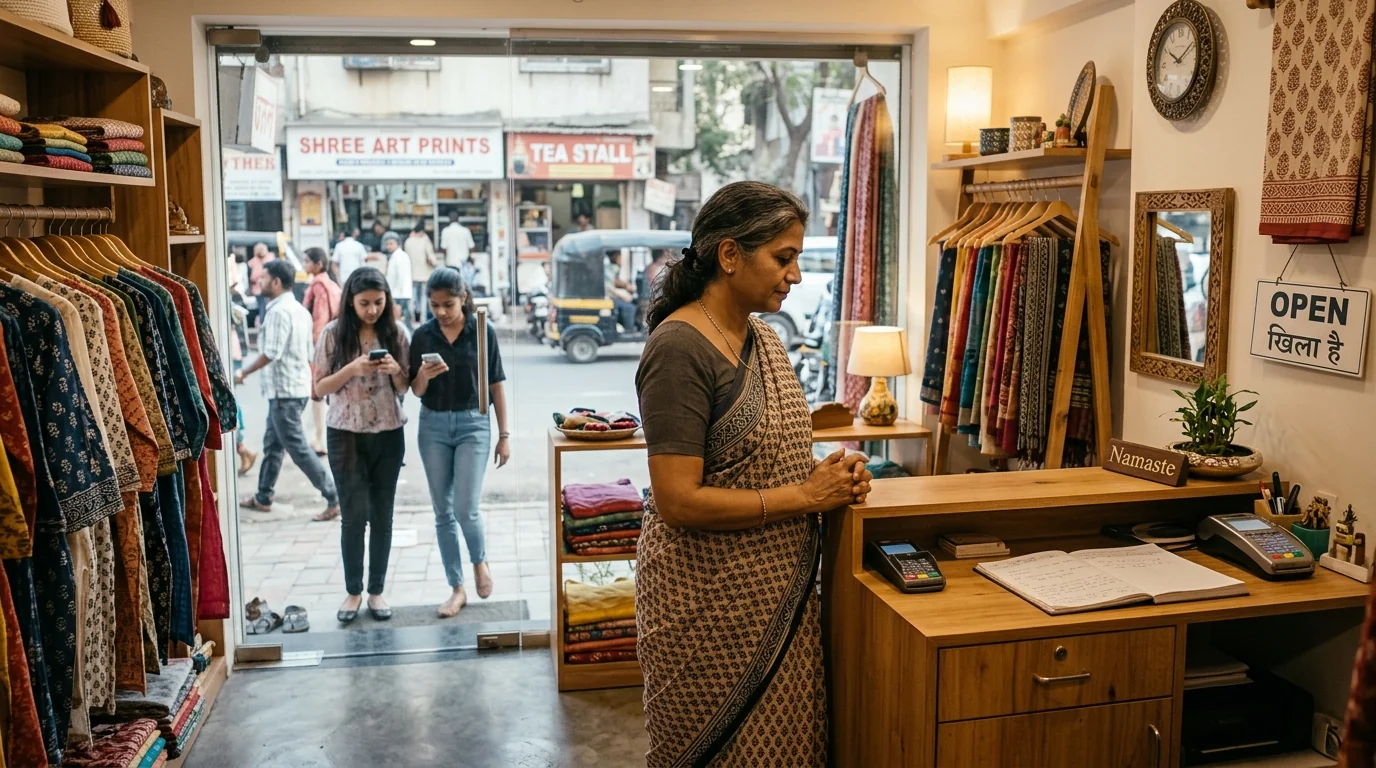
If you walk down any commercial street in Pune, Jaipur, Lucknow, or Coimbatore, you will find thriving neighbourhood businesses: boutiques, bakeries, photo studios, diagnostic clinics, and chartered accountant offices. Many have served loyal patrons for years through foot traffic and word of mouth.
In 2026, customer discovery habits look very different.
Having your business not online rarely causes a sudden crisis. Instead, the cost is silent: you never see the customers who chose someone else before leaving home. When a resident needs an interior designer, a tutor, or a caterer for a family event, they do not wander street to street. They open their smartphones and search.
When you do not appear in those digital moments, there is no polite rejection notice. The searcher simply contacts the next business whose address, service menu, photos, and contact options are laid out clearly on the web.
Building an active small business online presence is not about competing with tech giants or running a warehouse. It is about ensuring that when people in your city search for what you offer, your business is visible and ready to welcome them.
Key takeaways
- Staying offline quietly sends high-intent local buyers to competitors who make their details easy to find.
- Indian customers search online, compare options, and check timings before they visit or call.
- WhatsApp and Instagram help with chats, but they are not a full substitute for search-friendly, permanent pages.
- A dedicated website signals legitimacy to cautious buyers.
- You can launch a mobile-ready site without coding; Safnom’s Starter plan is free to explore.
- A website helps, but it does not guarantee sales or search rankings. Results depend on your business, your competition, and the quality of your content.
Customers Search Online Before They Ever Visit or Call
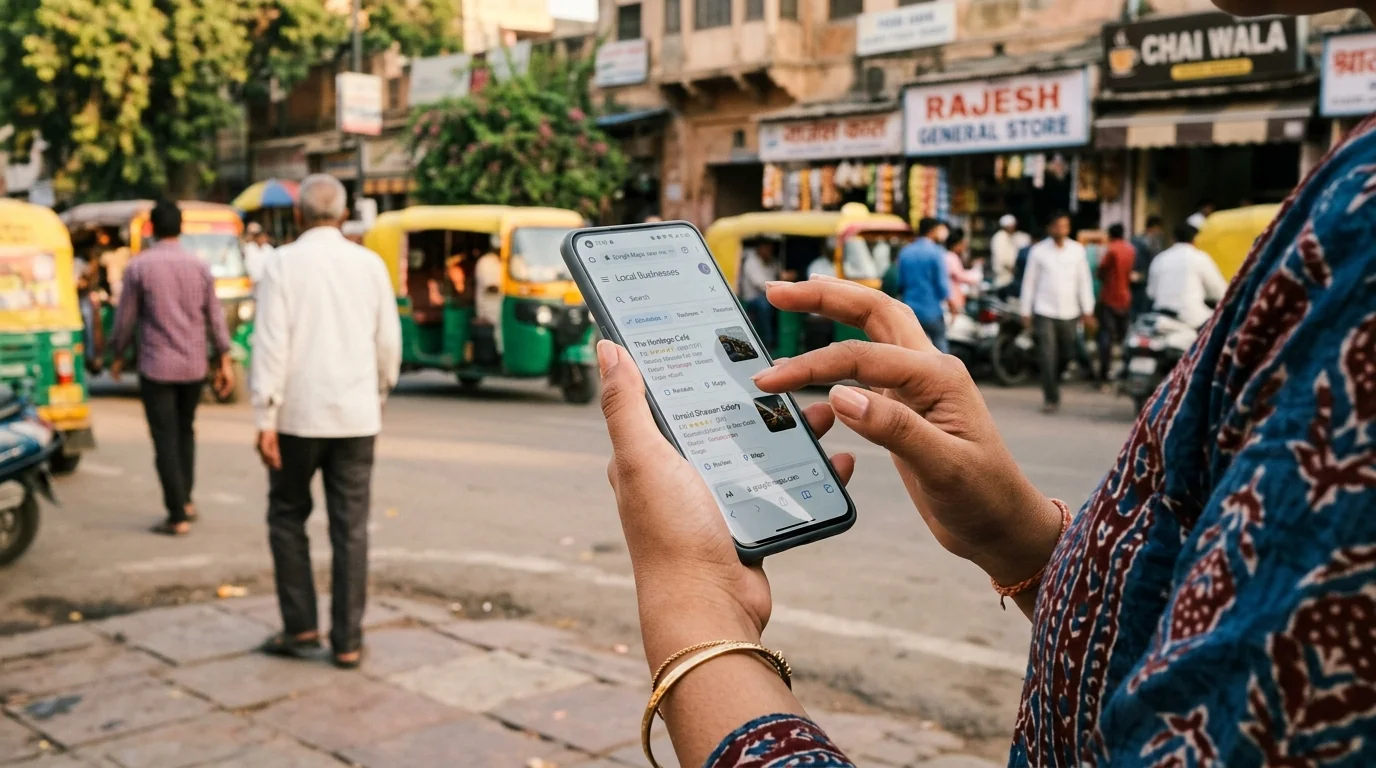
Consider how you make purchasing decisions today. When you need a car mechanic, a dry cleaner, or a dentist, do you wander down the road hoping to spot a signboard, or do you search on your phone first?
In 2026, customers searching online is the initial step for almost every planned purchase. Even when a customer intends to pay cash in person at an offline counter, their evaluation begins on a mobile screen.
People search with immediate, specific intent:
- "Best pre-school near Whitefield Bengaluru"
- "Candid wedding photographer in Chandigarh with packages"
- "Custom wooden furniture maker in Kirti Nagar Delhi"
- "Pure vegetarian catering service in Ahmedabad for 50 people"
If your business is not online, you are omitted from that evaluation. The customer cannot see your craftsmanship, check your services, or realise that your shop is five minutes away. They choose a competitor simply because that competitor was visible when the need arose.
The Limits of Depending Solely on WhatsApp and Social Media
Many Indian entrepreneurs say: "I do not need a website because I already have an Instagram account and a WhatsApp Business number."
WhatsApp and Instagram are valuable communication channels. Millions of interactions happen over chat daily, and short videos showcase creative work well. However, relying entirely on social media leaves critical gaps:
- You do not own the platform: Social media algorithms change often. Posts that reached thousands of followers last year may now reach only a fraction without paid ads.
- Information gets buried: Feeds are chronological. If a customer wants to check your terms, pricing packages, or complete tuition syllabus, they must scroll through dozens of older posts.
- Search engines cannot index private chats: Google does not index private WhatsApp chats. A customer searching Google for an emergency service in their area will never discover a phone number saved only in a chat profile.
| What matters | Your website | Social platforms |
|---|---|---|
| Search discovery | Indexed on Google for local queries | Limited to platform search and followers |
| Content ownership | You control pages, copy, and structure | Subject to platform rules and reach changes |
| Information structure | Organised services, pricing, FAQs | Fragmented across posts, reels, and stories |
| Contact | One clear path: call, form, WhatsApp | Often buried in bio links or DMs |
| Perception | Permanent business identity | Can feel informal or temporary |
A website does not replace your WhatsApp or Instagram—it anchors them. As we noted in our guide on why every small business needs a website, social media builds awareness, while a dedicated website provides clarity, credibility, and definitive answers.
The Trust Gap: Why Customers Hesitate When You Have No Website
Indian consumers are discerning and cautious. With the prevalence of digital scams, unverified social sellers, and fly-by-night operators, buyers actively look for credibility markers before making advance payments or booking an appointment.
When a business provides only a mobile number or an unverified social profile, questions naturally arise:
- Is this an established enterprise or an informal side project?
- Do they have an official workshop, clinic, or office address?
- Are their past customer reviews genuine, or are they unverified chat screenshots?
- Where can I read their refund, replacement, or cancellation policies?
A dedicated business website in India bridges this trust gap immediately. When customers see an official web page displaying your brand name, operating history, physical address, and transparent service details, their hesitation drops.
Whether you run a bridal photography studio in Chandigarh or a tax consultancy in Chennai, an organised portfolio page displaying high-resolution work and verifiable client stories gives prospective buyers confidence. A website acts as your permanent digital showroom, proving that you take your business seriously.
Missing Out on Local Google Searches and Maps Discovery
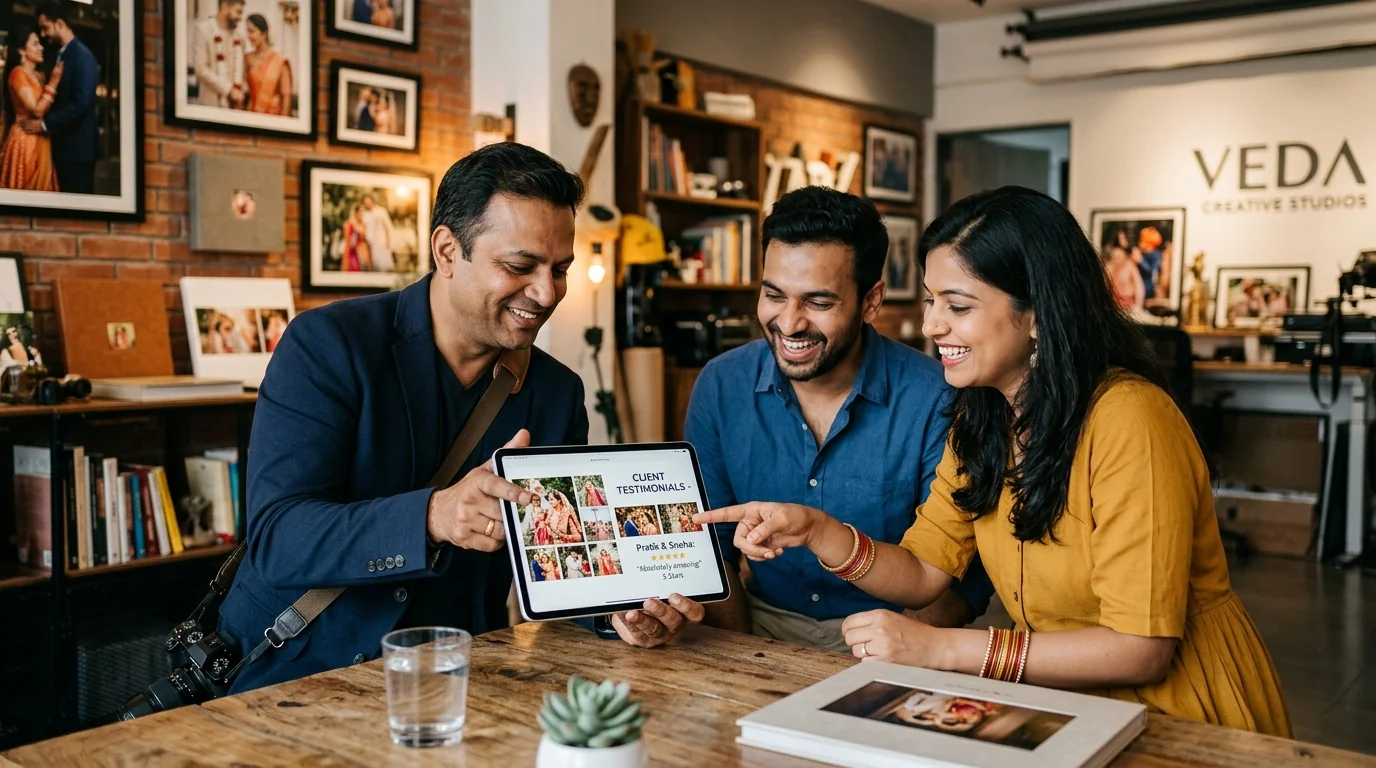
When residents search for everyday services, Google Search and Google Maps are their default tools. Whether looking for "car battery replacement in Thane" or "best south Indian breakfast near me", Google displays a curated local map pack featuring nearby businesses.
A realistic expectation: no website can promise page-one rankings or guaranteed traffic. Google says local results are mainly based on relevance, distance, and prominence, and that there is no way to request or pay for a better local ranking. You can read the details in Google’s own guide to improving your local ranking.
If your business is not online, you forfeit opportunities in two distinct ways:
Weakened Google Business Profile performance
You can claim a free Google Business Profile without a website, but complete, verified details matter. A profile linked to an active website with matching name, address, and phone (NAP) data helps customers—and Google—see that your business is active and legitimate.
Zero organic page rankings
Beyond the map pack, Google presents organic results for specific queries that a map pin cannot answer. For example, if someone searches for "cost of root canal treatment in Lucknow" or "CBSE class 10 maths coaching syllabus", Google displays dedicated web pages answering those questions. Without a website containing informative service pages, your business cannot rank for these valuable queries.
Basic Business Information Becomes Hard to Find
Consider how much time you spend each week answering the exact same routine questions on calls and chats:
- "Where exactly is your shop located?"
- "Are you open this Sunday or on public holidays?"
- "Do you provide home delivery or doorstep visits?"
- "Can you send your latest price list or menu?"
- "What payment methods do you accept?"
When your business is not online, answering these routine queries consumes hours of productive time. More importantly, for every person who takes the trouble to call, several others simply leave without asking because finding basic facts required too much effort.
A straightforward business website acts as an automated, around-the-clock receptionist. Visitors can immediately view:
- Your exact street address with a direct Google Maps direction link.
- Accurate opening and closing hours, including festival timings.
- Clear lists of services or products with descriptive overviews.
- Transparent pricing tiers, estimate guidelines, or downloadable menus.
- Frequently asked questions answering common doubts upfront.
When customers find answers to basic questions in thirty seconds, their conversation shifts from "Where are you located?" to "I want to book an appointment for tomorrow."
How Enquiries Silently Slip Away to Prepared Competitors
Let us examine a realistic scenario involving two independent businesses in the same neighbourhood:
Business A (the traditional specialist): A skilled cabinet maker in Pune with twenty years of carpentry experience. He produces exquisite solid teak furniture. However, he has no website, no active online presence, and relies strictly on word of mouth and a phone number painted on a metal shutter.
Business B (the digitally accessible studio): A newer furniture maker three streets away. His craftsmanship is solid, but what sets him apart is a simple, modern three-page website built with a no-code builder. His site showcases twenty crisp photos of finished dining tables and wardrobes, lists starting prices, outlines his wood-sourcing standards, and features a prominent green button: "Chat with us on WhatsApp for a custom estimate."
When a new homeowner moves into the area and searches Google for "custom wooden dining table maker Pune", who gets the enquiry?
The homeowner never discovers Business A. They spend four minutes browsing Business B's website, admire a solid teak dining set, tap the WhatsApp button, and initiate a conversation. Business A did not lose the sale because of inferior quality or high pricing; Business A lost the sale because they were digitally invisible at the exact moment the buyer was ready to purchase.
This dynamic repeats across every sector: dental clinics, dance academies, dry cleaners, accounting practices, and event planners. The business that provides clear information online wins the initial conversation.
Limited Ways to Showcase Your Full Portfolio, Products, and Reviews
Every business owner takes pride in their work. But when your business is not online, sharing that work with potential clients becomes cumbersome.
Sending forty uncompressed photos over WhatsApp clogs the customer's phone storage and looks unorganised. Posting a portfolio only on social media means your best projects get buried under newer posts within a few months.
A dedicated website offers clean, organised visual presentation:
- Boutiques & retail: Organise collections by season, occasion, fabric type, or price range without needing complex checkout software.
- Contractors & interior designers: Display before-and-after project comparisons with descriptions of materials used and project timelines.
- Coaching & tutors: Publish detailed course curriculums, batch schedules, faculty credentials, and parent feedback.
- Salons & wellness: Feature service packages (hair care, skincare, bridal grooming) along with hygiene standards and stylist profiles.
- Caterers & bakers: Showcase custom cake designs, dietary options (vegan, gluten-free, eggless), and portion guidance for celebrations.
Furthermore, a website allows you to feature genuine customer testimonials in a permanent, credible layout. Prospective buyers can read real stories from satisfied clients right next to the service they are considering.
Common Reasons Small Businesses Delay Going Online
If the advantages of having a website are so clear, why do many Indian small businesses still delay creating one? Four common misconceptions explain the hesitation:
“A website is too expensive for my budget.”
Years ago, building a website often required paying an agency a large upfront fee, along with recurring maintenance retainers. Today, template-based builders are far more affordable. Safnom’s Starter plan is free to explore and includes themes, the visual editor, and publishing on a safnom.in address after email verification (pricing).
“I do not know how to code or design.”
You do not need to write HTML or CSS. Safnom is built so you can create a business website without coding—edit text and images visually, preview on mobile, and publish when ready (features).
“I do not have time to manage a site.”
Start small: one homepage with name, services, photos, and contact. You can add pages later in the dashboard.
“I am not sure how to handle hosting and security.”
Safnom manages hosting, HTTPS on your published site, and updates in the background—you focus on your business, not servers (how it works).
How to Create a Business Website Without Coding
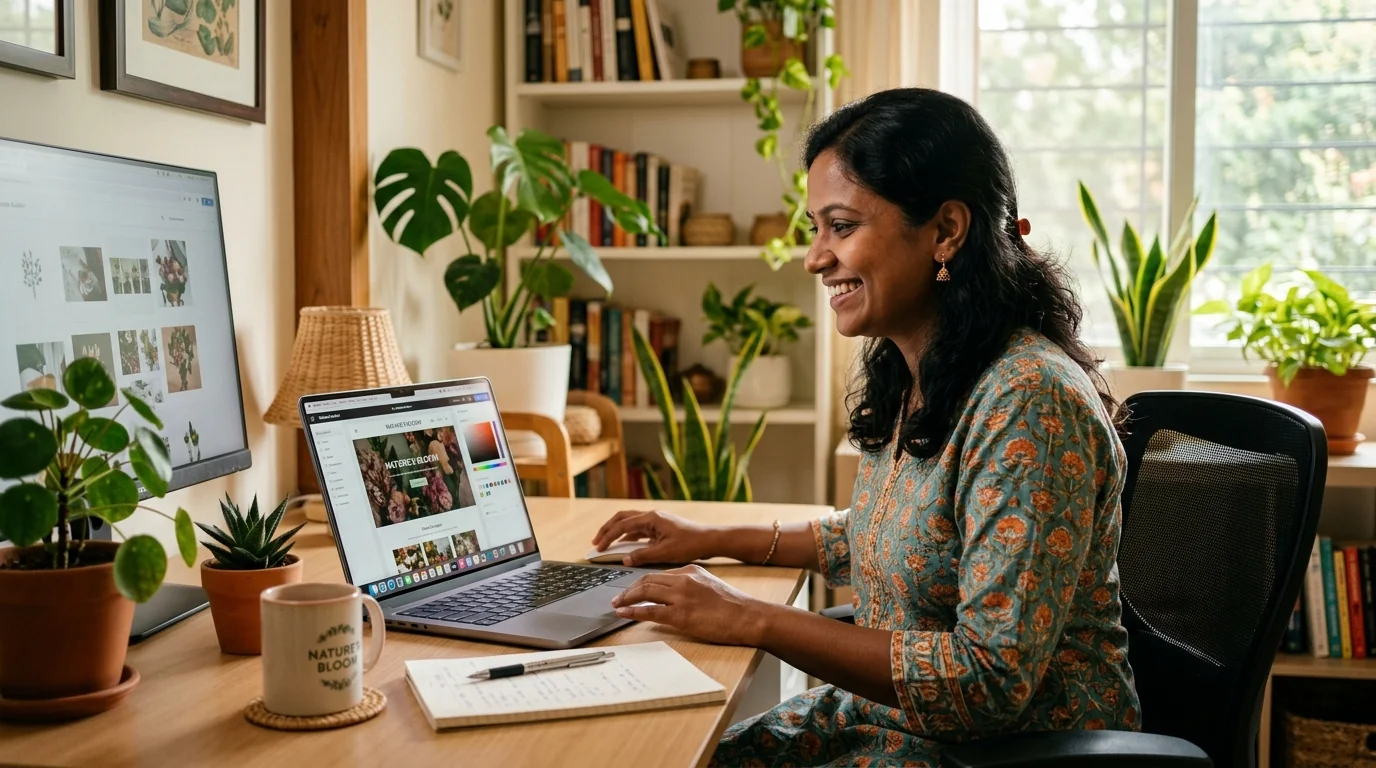
Establishing an online presence does not have to be overwhelming. You do not need an elaborate fifty-page portal on day one. A straightforward path that matches how Safnom works today:
- Claim and update your Google Business Profile so your name, address, phone, and hours match what you publish on your site.
- Choose a suitable website template from the template gallery or dashboard themes.
- Add your business name, services, and contact information in the visual editor and business profile.
- Add relevant photos and branding from the media library.
- Customise colours, text, and sections to fit your business.
- Preview on mobile and desktop before you go live.
- Publish on your safnom.in subdomain (how it works).
- Connect a custom domain you already own when it makes sense (domains).
Safnom is a no-code website builder aimed at Indian small businesses and first-time founders (who it’s for). You can create a free Safnom account to explore it—no credit card required.
A Practical Website Checklist for Small Business Owners
Before you publish, skim this list:
- Business name, address, and phone match on your website and Google profile
- Clear headline and short description on the homepage
- Products or services listed in plain language
- Real photos (shop, team, or work samples)
- Phone and WhatsApp contact options
- Location and opening hours where applicable
- Mobile-friendly layout (use preview before publishing)
- Privacy policy where you collect customer data (add a simple page if needed)
- Page titles and descriptions filled in SEO settings
- HTTPS on your published safnom.in or connected domain
- One obvious next step for visitors (call, WhatsApp, form, or visit)
Conclusion: Take the First Step Toward Visibility
When your business is not online in 2026, you are not failing visibly—you are simply missing out on the steady stream of local discovery happening all around you. Every day, your neighbours, newcomers to your city, and long-time residents search their phones for services you provide.
A professional website is not an extravagance reserved for tech startups or large corporations. It is the digital foundation for any modern Indian enterprise that wants to build customer trust, support discovery, and turn casual visitors into enquiries.
If you have been waiting because of cost, time, or coding fears, start with one clear homepage this week. Explore Safnom, pick a template, and publish when you are happy with the preview. Create your website without coding on Safnom, and keep improving it as your business grows.
Have questions first? Read the FAQ or contact support.